BevyCSharp 0.1.32
See the version list below for details.
dotnet add package BevyCSharp --version 0.1.32
NuGet\Install-Package BevyCSharp -Version 0.1.32
<PackageReference Include="BevyCSharp" Version="0.1.32" />
<PackageVersion Include="BevyCSharp" Version="0.1.32" />
<PackageReference Include="BevyCSharp" />
paket add BevyCSharp --version 0.1.32
#r "nuget: BevyCSharp, 0.1.32"
#:package BevyCSharp@0.1.32
#addin nuget:?package=BevyCSharp&version=0.1.32
#tool nuget:?package=BevyCSharp&version=0.1.32
BevyCSharp
Write Bevy games in C#.
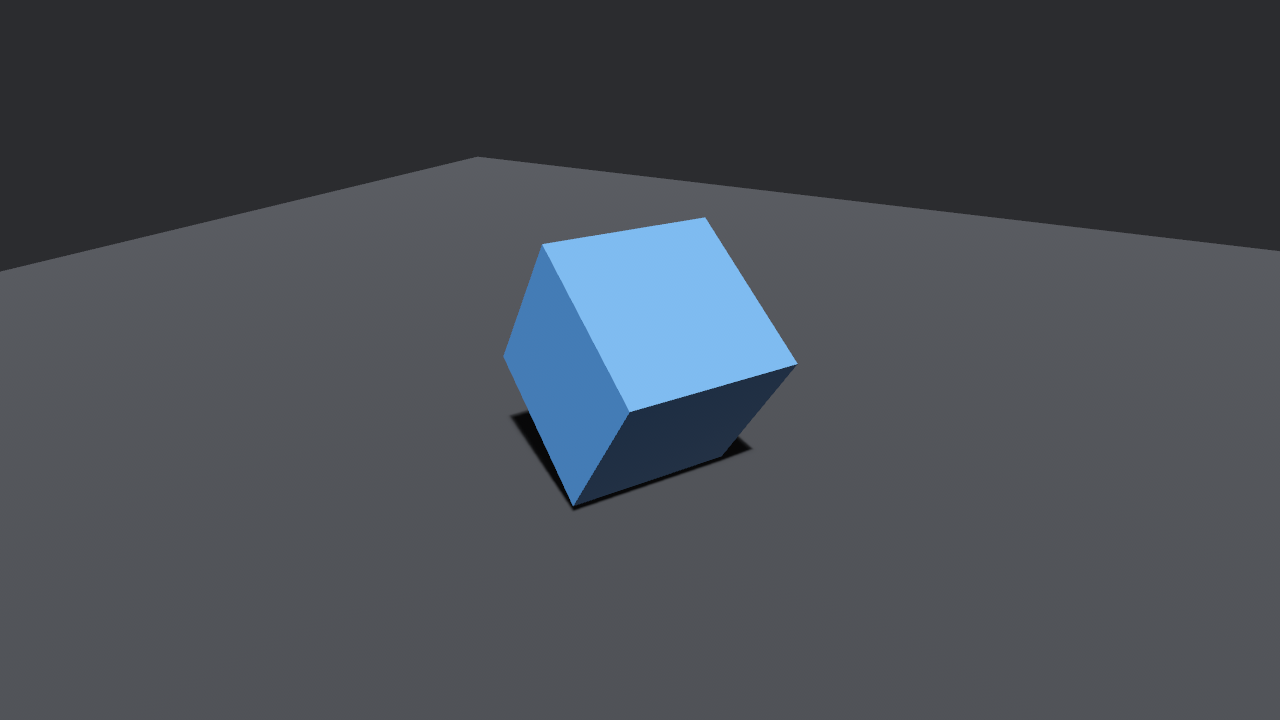
<sup>BevyCSharp.Sample, running on Bevy's PBR renderer through the bridge:
dotnet run --project BevyCSharp.Sample</sup>
Mark a struct [Behavior], give it methods with stage attributes, and a Roslyn source generator
wires it into Bevy's schedule, as a component and a system at the same time. Bevy is the engine
underneath: its ECS, its scheduler, its timing, its input, and its renderer.
using Bevy;

[Behavior]
public partial struct Bouncer
{
    public float Height;
    public float Velocity;

    [OnStartup]
    public static void Spawn(BehaviorContext ctx)
        => ctx.Ecs.Add(ctx.Ecs.Spawn(), new Bouncer { Height = 5f });

    [OnUpdate]
    public void Tick(BehaviorContext ctx)
    {
        Velocity -= 9.81f * ctx.Time.Delta;
        Height += Velocity * ctx.Time.Delta;

        if (Height > 0f) return;
        Height = 0f;
        Velocity = -Velocity * 0.8f;
    }
}
In Program.cs
BevyApp.Run();
Behaviors are discovered automatically, so a consuming project needs no registration code.
Install
dotnet add package BevyCSharp
The package carries three things: the managed library, the source generator (in the analyzer
slot), and a prebuilt native bridge per runtime identifier under runtimes/.
The behavior model
A [Behavior] struct is both a component and the systems that act on it. Which one a method is
depends on whether it is static.
Static methods are plain systems
They run once per frame. Use them for global logic that queries other components.
[Behavior]
public partial struct Gravity
{
    [OnUpdate]
    public static void Apply(BehaviorContext ctx)
    {
        foreach (var row in ctx.Ecs.Query<Velocity>())
            row.Component.Y -= 9.81f * ctx.Time.Delta;
    }
}
Query yields references into Bevy's table storage, so assigning to row.Component writes the
real component. There is no copy and no write-back step.
Instance methods run per entity
this is bound by reference to that entity's component. The struct's fields are per-entity state
living in Bevy's tables.
[Behavior]
public partial struct Spinner
{
    public float Angle;
    public float Speed;

    [OnUpdate]
    public void Tick(BehaviorContext ctx) => Angle += Speed * ctx.Time.Delta;
}
Above ~4096 entities the per-entity loop is automatically split across the thread pool.
Plain components
Any blittable struct is a component. It needs no attribute and no interface, the first time a
behavior touches it, its layout is registered with Bevy and it becomes a real Bevy component
with a real ComponentId.
public struct Position { public float X, Y; }
public struct Falls;   // a zero-field tag costs nothing to store
Bevy's own components
A struct you declare is registered with Bevy from its layout. Bevy's own components are the opposite problem: they are Rust types C# has no handle on, so they are asked for by name.
var entity = ctx.Ecs.Spawn();
ctx.Ecs.AddNative(entity, NativeComponents.Transform, Transform.At(0f, 5f, 0f));

ref var transform = ref ctx.Ecs.GetNativeRef<Transform>(entity, NativeComponents.Transform);
transform.Translation.Y -= 9.81f * ctx.Time.Delta;
That is Bevy's real Transform, not a copy kept in sync, so propagation and rendering see the
write. Everything downstream is keyed on component ids rather than types, so these work with
chunked iteration, filters and change detection like any other component:
using var chunks = ctx.Ecs.Chunks<Transform>(NativeComponents.Transform);
Only components C# can mirror byte for byte are exposed, and the mirrors are checked against the
engine the first time an id is resolved. They are easy to get subtly wrong in a way nothing else
catches. Transform uses Rust's default representation, so the compiler reorders its fields to
save padding: Quat is sixteen-byte aligned and moves ahead of the two vectors, giving offsets
of 0, 16 and 28 rather than the source order. Both layouts are 48 bytes, so a size check passes
either way and the mistake shows up as stretched geometry. The check compares every offset.
Assets
var mesh = AssetServer.Load(AssetKind.Mesh, "models/ship.gltf");

if (mesh.IsLoaded) { }
AssetServer.Release(mesh);
Loading is asynchronous, so Load returns as soon as the request is queued and the handle
reports Loading until the file has been read. Paths resolve relative to the assets directory
beside the executable.
Bevy's own handle is generic and reference counted, and neither property survives a trip through
a C ABI, so C# holds a key into a table on the engine side that owns the real handle. Holding one
keeps the asset loaded; Release gives up that reference. The key carries a generation as well
as a slot index, so a released handle does not start naming whatever later took its slot.
Mesh and Image load in any build. StandardMaterial and Shader need a render build, and
asking for one without it reports which build would support it. Scene loading is not wired up:
in 0.19 Scene became a trait rather than a loadable asset.
Drawing
Meshes and materials can be built without an asset file, and attached to an entity to make it drawable. This needs a render build.
var camera = Render.SpawnCamera3d();
ctx.Ecs.AddNative(camera, NativeComponents.Transform,
    Transform.LookingAt(new Vec3(0f, 6f, 12f), Vec3.Zero, Vec3.UnitY));

Render.SpawnLight(LightKind.Directional, 10_000f);

var mesh = Render.CreateMesh(MeshShape.Cuboid, 1f, 1f, 1f);
var material = Render.CreateMaterial(0.25f, 0.55f, 0.85f);

var entity = ctx.Ecs.Spawn();
Render.SetMesh(ctx.Ecs, entity, mesh);
Render.SetMaterial(ctx.Ecs, entity, material);
Handles are references, so one mesh and one material can be shared by any number of entities. Attaching a mesh goes through Bevy's own insert rather than a byte copy, which is what pulls in the components Bevy requires alongside it, so an entity needs nothing further to be drawn.
On a headless build these refuse and say which build would support them, rather than silently
doing nothing. Guard with App.HasRenderer to write one behavior that runs either way, as
BevyCSharp.Sample/Behaviors/Scene.cs does.
Hierarchy
ctx.Ecs.SetParent(moon, planet);

var parent = ctx.Ecs.ParentOf(moon);       // planet
var children = ctx.Ecs.ChildrenOf(planet); // [moon]
ctx.Ecs.ClearParent(moon);
A child's Transform is relative to its parent, and Bevy combines them during propagation, so a
parented entity only has to describe its own motion. Parenting goes through Bevy's relationship
API rather than a raw component write, which is what keeps the reverse child list correct.
Parenting is a structural change, so queue it on ctx.Cmd when calling from inside a loop.
Attributes
Stages
| Attribute | When |
|---|---|
[OnStartup] |
Once, before the first frame |
[OnFirst] |
Top of every frame |
[OnPreUpdate] |
Before Update |
[OnUpdate] |
Main gameplay stage |
[OnPostUpdate] |
After Update, before queued commands are applied |
[OnRender] |
Drawing and overlays, ordered before Last |
[OnLast] |
End of every frame |
[OnCleanup] |
Once, on the way out |
Filters
[With] and [Without] restrict an instance method to a subset of entities. They are resolved
per archetype, not per entity, so they cost nothing in the loop.
[OnUpdate]
[With(typeof(Alive))]
[Without(typeof(Frozen))]
public void Tick(BehaviorContext ctx) { }
[Changed] skips entities whose listed components did not change this frame. It is a per-entity
test against Bevy's change ticks, so a method carrying it runs sequentially.
Conditions
[RunIf] gates a system on a static bool member of the same struct, a field, a property, or a
method taking a World. The generator checks the member exists at compile time, so a rename
cannot silently disable your system.
[OnUpdate]
[RunIf(nameof(IsPlaying))]
public static void Tick(BehaviorContext ctx) { }

public static bool IsPlaying(World world)
    => world.TryGetResource<GameState>(out var s) && s.Playing;
[ToggleKey] is the entire implementation of "press F3 to show the overlay":
[OnRender]
[ToggleKey(Key.F3, DefaultEnabled = false)]
public static void DrawHud(BehaviorContext ctx) { }
KeyModifier is a flags enum, so a shortcut can require any number of modifiers at once:
[ToggleKey(Key.F3, KeyModifier.Ctrl)]                     // Ctrl + F3
[ToggleKey(Key.F3, KeyModifier.Ctrl | KeyModifier.Shift)] // Ctrl + Shift + F3
Each flag is side-agnostic, so Ctrl is satisfied by either Ctrl key, which is what a shortcut
normally means, and matches winit's ModifiersState, the layer Bevy's own windowing sits on.
Bevy itself has no modifier type; it exposes only the individual KeyCodes. To pin one side, or
to build a chord out of an ordinary key, write the check yourself:
[OnRender]
[RunIf(nameof(ChordHeld))]
public static void DrawHud(BehaviorContext ctx) { }

public static bool ChordHeld(World world)
    => world.Resource<Input>().AllKeysDown([Key.ControlLeft, Key.F3]);
Input mirrors Bevy's ButtonInput here: AnyKeyDown, AllKeysDown, AnyKeyPressed and
AnyKeyReleased take a span of keys, like any_pressed / all_pressed / any_just_pressed.
Threading
A system runs on Bevy's main thread with the world loaned to it. When the generator fans a per-entity loop out across worker threads, those threads can safely write through the component reference they were handed, the partitions are disjoint, but they cannot touch the world.
ctx.Ecsimmediate, main thread only. From a worker it throws with a message telling you so, rather than corrupting the world.ctx.Cmda thread-safe queue, applied at the end ofPostUpdate.ctx.Time,ctx.Inputplain snapshots, safe to read anywhere.
Queue structural changes rather than applying them mid-loop. Spawning, despawning, adding and removing all move entities between archetypes, which invalidates every reference the loop holds:
[OnUpdate]
public void Tick(BehaviorContext ctx)
{
    Fuse -= ctx.Time.Delta;
    if (Fuse <= 0f) ctx.Cmd.Despawn(ctx.Entity);   // not ctx.Ecs.Despawn
}
Running in a window
The sample has a switch at the top of Program.cs:
const bool RunInWindow = false;
const GraphicsBackend Backend = GraphicsBackend.Vulkan;
or from the command line, which wins over the constants:
build/build-native.sh --render                  # once: build a bridge with the renderer

dotnet run --project BevyCSharp.Sample                        # a rotating cube
dotnet run --project BevyCSharp.Sample -- --backend vulkan
dotnet run --project BevyCSharp.Sample -- --headless --frames 120
The sample opens a window by default and draws a lit cube turning in place. Escape closes it.
Both modes run the identical behavior scripts. Nothing branches on whether a renderer exists;
the engine decides that, from Config.
Config.Backend pins the graphics API. Automatic already prefers Vulkan on Linux and Windows,
so naming it is about making the choice explicit and failing loudly rather than falling back
silently. App.DescribeAdapter() reports what you actually got, which is how you check:
[Renderer] adapter: Vulkan | NVIDIA GeForce RTX 4070 Laptop GPU | DiscreteGpu | NVIDIA
[Renderer]  245.7 fps   frame    840   spinners 3
Ask for a backend the machine has no driver for and startup fails with a message saying so, rather than quietly picking something else.
Cameras, lights, meshes and materials are reachable from C# through Render, which is what
draws the scene in the screenshot above. See Drawing for the calls.
How it works
your game (C#)
      │  [Behavior] structs
      ▼
BevyCSharp.Generator          Roslyn generator: emits one runner per behavior plus a
      │                       module initializer that announces them
      ▼
BevyCSharp (managed)          App, World, EcsWorld, EcsCommands, BehaviorContext,
      │                       Time, Input, the behavior runners
      ▼  C ABI
bevy_csharp (Rust cdylib)     dynamic component registration, exclusive systems,
      │                       chunked table access, frame-state mirroring
      ▼
Bevy 0.19                     ECS, scheduler, time, input, windowing, renderer
A few decisions worth knowing about:
Components are registered at runtime. Bevy normally learns component layouts from Rust types
at compile time. C# types are not available to it, so each blittable struct is registered with its
size and alignment through Bevy's dynamic ComponentDescriptor support. From that point it is an
ordinary Bevy component: it lives in tables, participates in archetypes, and Bevy's own change
detection sees it.
Iteration is zero-copy. A query hands C# raw pointers into Bevy's table storage. The per-entity loop writes straight into the component column, no marshalling, no staging buffer.
C# systems are exclusive systems. While managed code can spawn and despawn at any moment, that is the only sound option, so Bevy serialises C# systems against each other. The parallelism that matters is still there: it is inside the per-entity loop, which is where the entity counts are.
Discovery is generated, not scanned. The generator emits a module initializer per assembly, so registrations have announced themselves before the app is built. A reflection scan remains as a fallback for assemblies that are loaded but untouched.
Building from source
You need the .NET 10 SDK and Rust.
build/build-native.sh          # build the native bridge (headless profile)
dotnet build                   # build the managed side
dotnet test                    # run the suite
dotnet run --project BevyCSharp.Sample -- --frames 120 --verbose
Everything generated lands in build/, cargo's target directory, the staged per-RID artifacts,
and the packed .nupkg. The repository root stays clean.
BevyCSharp/            managed runtime library
BevyCSharp.Generator/  Roslyn source generator
BevyCSharp.Sample/     runnable example behaviors
BevyCSharp.Tests/      test suite, run against a real Bevy app
native/                Rust sources for the bridge
build/                 the native build scripts, and everything they generate
.github/workflows/     CI: builds every runtime identifier, then packs them together
Native profiles
The bridge builds in two profiles:
| Profile | What it includes |
|---|---|
headless |
App, ECS, time, input, transform. No window, no GPU. The default. |
render |
Bevy's DefaultPlugins: windowing, renderer, input backend. |
build/build-native.sh --render          # bash
build/build-native.ps1 -Render          # PowerShell, same output
The render profile is assembled feature by feature rather than taking Bevy's
default_platform, which drags in gamepad support and links Wayland at build time. As
assembled here it needs nothing but a C compiler on any platform: X11 comes through x11-dl,
Wayland through wayland-dlopen, and Vulkan through the loader, all resolved at runtime. It
does take several minutes to compile and produces a much larger library.
Config.Headless forces the windowless path even on a render build, which is how the tests and
a dedicated server run the same behavior code without a display.
Platforms
The managed assembly is portable. The bridge is a cdylib, so it has to be compiled once per runtime identifier, and a package can only contain the platforms someone actually built.
| Runtime identifier | Windowing | Graphics |
|---|---|---|
linux-x64, linux-arm64 |
X11 or Wayland | Vulkan |
linux-musl-x64, linux-musl-arm64 |
X11 or Wayland | Vulkan |
win-x64, win-arm64 |
Win32 | Vulkan or DX12 |
osx-x64, osx-arm64 |
Cocoa | Metal |
Each is built by the same command, on a machine that can target it:
build/build-native.sh --render --target aarch64-apple-darwin
.github/workflows/build.yml does this across a runner matrix and packs every RID into one
package. Locally you get whichever platform you built; dotnet pack skips the slots you have
no binary for rather than failing.
Three platform notes worth knowing:
A Linux build only runs on a glibc at least as new as the one it was built on. Building on a current Fedora and running on an Ubuntu LTS fails at load with a
GLIBC_x.yz not founderror, and so does building in one container and running in another. Pass--portableto build inside a Debian container instead, which lowers the floor to glibc 2.35 and covers every supported distribution:build/build-native.sh --render --portableIt needs podman or docker, and prints the resulting floor either way. The workflow builds on
ubuntu-latest, so packaged binaries are already portable; this is for local builds.macOS requires the window event loop to own the main thread.
App.Runchecks this and throws a clear error rather than letting it crash inside AppKit. The check applies only when a window is actually going to be opened (App.WillOpenWindow), because the constraint belongs to windowing rather than to the engine: a headless run has no event loop and works from any thread, which is what lets a test runner drive it from its own worker threads.The one Linux binary serves both X11 and Wayland. Which is used is decided at runtime, so there is no separate build for each.
Beyond the desktop, Bevy also targets Android, iOS and the web. Those need a different .NET story entirely (a different app model and, for the web, a different runtime), so they are out of scope here rather than merely unbuilt.
Packing
build/build-native.sh          # stage the native bridge first
dotnet pack BevyCSharp/BevyCSharp.csproj -c Release
Packing fails with BCS101 if the staged bridge is older than the Rust sources, because shipping
a stale one produces an EntryPointNotFoundException far from its cause.
To ship more than one platform, run build-native.sh --target <triple> for each; every staged RID
slot is picked up at pack time and missing ones are skipped.
Publishing
An ordinary push is cheap: Linux only, tested, nothing published. Two things change that.
Changed the readme, the icon or the project metadata. None of that affects the binaries, so pushing to the default branch republishes on its own. It reuses the native binaries from the last full build and only repacks around them, which takes a couple of minutes instead of an hour.
Changed the code. Put [publish] anywhere in a commit message. That builds all six platforms,
tests on all three operating systems, and publishes:
git commit -m "add the thing [publish]"
The marker is a plain substring, so it works alongside any other text and in any commit of the push, not only the last one. Either route can also be started by hand from the Actions tab.
Versions are MAJOR.MINOR.<commit count>: the first two from VersionPrefix in
Directory.Build.props, the last from git rev-list --count HEAD. One counter that only grows,
shared by both routes so they can never disagree, and nothing stored anywhere. To move to
0.2.x, change VersionPrefix and push.
Republishing needs artifacts from a full build to still exist, and they expire after two weeks.
If none survive, the run fails and says to push a [publish] commit first. An ordinary push
uploads artifacts too, but they cover linux-x64 alone, so the reuse step checks that a
candidate run really did build every platform before taking anything from it.
Status and limitations
Early. The behavior system, the ECS bridge and the schedule work and are covered by tests that run against a real Bevy app. Known gaps:
- A locally built package contains only the platform you built it on. Use the CI workflow, or
run
build-native.shon each target platform, to produce a package covering all of them. - A render build draws: mesh primitives, physically based materials, cameras and lights are all
reachable from a behavior script, verified on Vulkan. What is not reachable is everything past
that first layer. Loading a mesh from a glTF file needs
bevy_gltf, textures are not bound to materials, and UI, text, audio, animation and scenes have no bridge at all. BehaviorsPlugin.ScriptsDirectoryis reserved for hot-reloading behavior scripts and does nothing yet.- Component filters must be table-stored components, which is everything C# registers. A filter naming a Bevy-side sparse-set component is rejected rather than silently wrong.
Contributing
Prose in this repository follows .github/STYLE.md: no em dashes, no spaced hyphens as punctuation, no padded section banners, and comments that explain why rather than restate the code.
License
Mozilla Public License 2.0. The full text is in LICENSE, and it ships inside the package.
MPL-2.0 is file-level copyleft: changes to files that are part of this project have to stay under it and be made available in source form, while anything you build around it, including a game that references the package, is yours under whatever terms you like. Bevy itself is MIT and Apache-2.0, which this can incorporate freely.
| Product | Versions Compatible and additional computed target framework versions. |
|---|---|
| .NET | net10.0 is compatible. net10.0-android was computed. net10.0-browser was computed. net10.0-ios was computed. net10.0-maccatalyst was computed. net10.0-macos was computed. net10.0-tvos was computed. net10.0-windows was computed. |
-
net10.0
- No dependencies.
NuGet packages
This package is not used by any NuGet packages.
GitHub repositories
This package is not used by any popular GitHub repositories.